
World Oceans Day: The Sea That Powers Indonesia’s Economy
As the world marked World Oceans Day on June 8, attention turned once again to the importance of protecting and sustainably managing the world's oceans. This year's United Nations theme, “Reimagine: Beyond the World We Know, A New Relationship With Our Ocean,” calls for a more balanced relationship between economic development and the long-term health of marine ecosystems.
For Indonesia, the ocean is far more than a natural asset. It is a trade route, an energy corridor, a source of food security, and one of the foundations of the nation's economic activity.
As the world's largest archipelagic nation, Indonesia is home to more than 17,000 islands connected by vast maritime territory. The country's Exclusive Economic Zone (EEZ) spans approximately 6.1 million square kilometers, more than three times its land area. Positioned between the Indian and Pacific Oceans, Indonesia occupies one of the most strategically important locations in global maritime trade.
The Malacca Strait, Sunda Strait, and Lombok Strait serve as critical shipping routes connecting Asia with the rest of the world. As a result, Indonesia's waters are important not only for domestic connectivity but also for regional and global commerce.
The Ocean as Economic Infrastructure
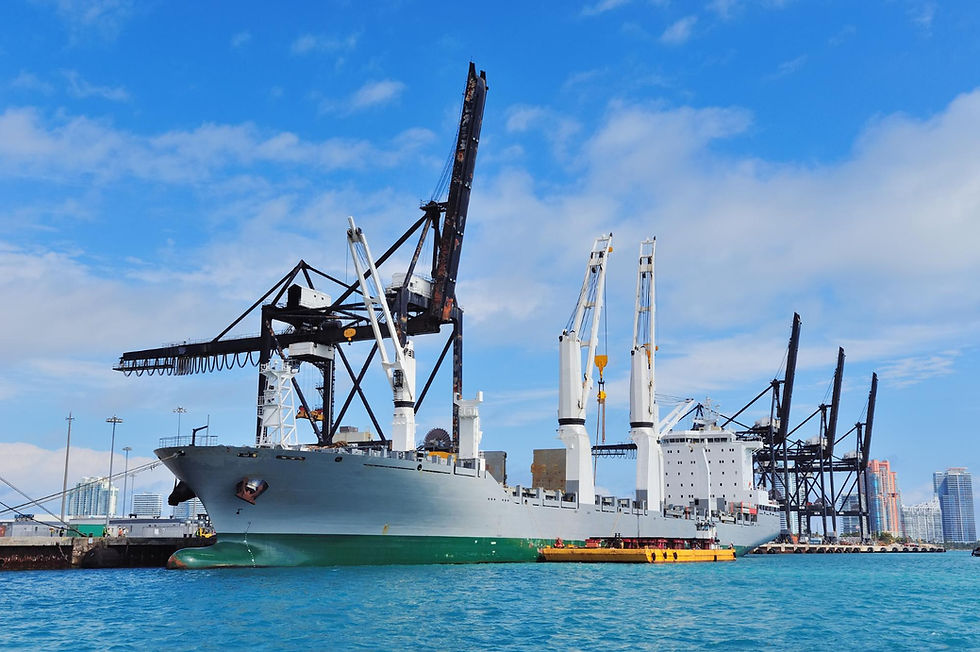
Indonesia relies heavily on maritime connectivity. The sea functions as a vast economic corridor, linking producers, manufacturers, exporters, and consumers across thousands of islands. Consumer goods, industrial materials, and export commodities all depend on maritime transportation networks.
This role is particularly important given Indonesia's position as a major exporter of strategic commodities, including coal, nickel, palm oil, and manufactured products.
According to Indonesia's Ministry of Transportation, maritime-related activities contributed approximately 7% of the country's Gross Domestic Product (GDP) in 2025, highlighting the sector's significance to economic growth.
The Industries Behind Indonesia’s Maritime Economy
Indonesia's maritime economy encompasses a diverse range of interconnected industries that support trade, energy, employment, and connectivity across the archipelago.
Cargo shipping and maritime logistics form the backbone of domestic distribution and international trade, enabling goods to move efficiently across a country that stretches more than 5,000 kilometers from west to east. In the energy sector, Offshore Support Vessel (OSV) operators provide specialized fleets that support offshore oil and gas exploration and production activities, supported by port services, pilotage and towing providers, and shipyards that maintain and expand the vessels operating throughout Indonesian waters.
Beyond transportation and infrastructure, Indonesia's maritime sector also relies on a broad ecosystem of supporting services. As one of the world's largest maritime nations, the country requires a steady pipeline of qualified seafarers, marine engineers, offshore workers, and maritime professionals, creating demand for maritime education, certification, workforce development, and occupational health and safety services.
Maritime tourism is another growing segment, with cruise tourism, recreational boating, diving, sailing, and other marine-based activities helping to showcase Indonesia's extensive coastline, islands, and marine biodiversity. Together with fisheries and aquaculture—which remain important contributors to food security, employment, and export earnings—these industries form a broad maritime ecosystem that extends far beyond the movement of ships and cargo.
Maritime Exposure on the Indonesia Stock Exchange
For investors, exposure to Indonesia's maritime economy can be found through several companies listed on the Indonesia Stock Exchange (IDX).
PT Samudera Indonesia Tbk. (SMDR) and PT Temas Tbk. (TMAS) are among the country's leading shipping and logistics operators, supporting both domestic distribution and international trade flows.
Within offshore energy services, PT Pelayaran Nasional Ekalya Purnamasari Tbk. (ELPI), PT Sillo Maritime Perdana Tbk. (SHIP), PT Soechi Lines Tbk. (SOCI), and PT Newport Marine Services Tbk. (BOAT) operate specialized vessels serving Indonesia's oil and gas industry.
Meanwhile, PT Jasa Armada Indonesia Tbk. (IPCM) provides pilotage and towing services that facilitate vessel movements across Indonesian ports.
Although these companies operate in different segments, they share a common characteristic: their performance is often closely linked to economic activity taking place across Indonesia's waters.
Reading the Economy Through the Sea
World Oceans Day reminds us that protecting the ocean is not only an environmental responsibility but also an economic necessity. The sea is far more than a geographic feature surrounding the nation; it is one of the foundations upon which trade, energy, food security, connectivity, and long-term economic growth continue to be built.
As June is also recognized globally as World Ocean Month, the occasion serves as a broader reminder of the ocean's importance to communities, industries, and future generations. Safeguarding the ocean means protecting not only a remarkable natural heritage, but also the opportunities, livelihoods, and resilience that depend on healthy and sustainable marine ecosystems.
Disclaimer: This content is created for educational purposes or service promotion, and does not constitute a recommendation to buy or sell any specific Securities. Any risks arising from investment decisions made based on the information in this publication are the sole responsibility of the respective audience. PT KAF Sekuritas Indonesia is licensed and supervised by the Financial Services Authority (Otoritas Jasa Keuangan / OJK).

Comments